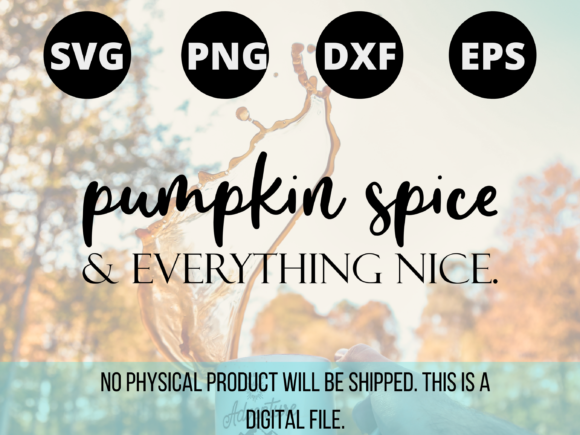
Unlocking Autumn Creativity: A Complete Guide to Pumpkin Spice Digital Design Files
There is a distinct magic that arrives with the changing of the leaves. The air turns crisp, sweaters come out of storage, and a specific aroma begins to permeate coffee shops and kitchens alike: pumpkin spice. For crafters, designers, and small business owners, this seasonal shift represents more than just a flavor profile; it is a massive opportunity for creativity and commerce. At the heart of modern autumn crafting lies a versatile digital asset often described as "Pumpkin Spice and Everything Nice." But what exactly does this entail in the digital realm? It is not merely an image; it is a comprehensive toolkit comprising SVG, PNG, DXF, and EPS files.
Understanding these file formats is the key to unlocking their full potential. Whether you are a beginner looking to personalize your home decor or an experienced entrepreneur scaling your production on a cutting machine, grasping the nuances of these formats will transform how you approach your projects. This guide explores the purpose, significance, and practical application of these essential digital files, helping you navigate the world of seasonal design with confidence.
The Essence of Digital Autumn Design
When we talk about "Pumpkin Spice and Everything Nice" in a digital context, we are referring to a curated collection of vector and raster graphics designed to capture the cozy essence of fall. These designs typically feature warm color palettes of orange, brown, and cream, incorporating motifs like pumpkins, cinnamon sticks, maple leaves, and whimsical typography. However, the true value of these collections lies not just in the artwork itself, but in the versatility provided by offering multiple file formats.
In the past, crafters were limited to physical stencils or hand-drawn patterns. Today, technology allows us to manipulate designs with precision. By providing a bundle that includes SVG, PNG, DXF, and EPS files, creators ensure that their artwork can be used across a vast array of platforms and machines. This inclusivity is crucial because different software and hardware require different types of data to function correctly. A design that looks beautiful on a screen might fail on a cutting machine if the wrong file type is used. Therefore, understanding what is included in these bundles is the first step toward successful project execution.
Breaking Down the File Formats
To truly leverage these digital assets, one must understand the specific role of each file type. Let's delve into the four pillars of this digital collection.
- SVG (Scalable Vector Graphics): This is arguably the most popular format for modern crafters using machines like the Cricut or Silhouette. An SVG file is a vector image, meaning it uses mathematical paths rather than pixels to define shapes. The superpower of the SVG is its scalability. You can resize a pumpkin design from the size of a coin to the size of a billboard without losing any quality or experiencing pixelation. It is ideal for cut files, allowing machines to know exactly where to slice through vinyl, cardstock, or heat transfer material.
- PNG (Portable Network Graphics): While SVGs are for cutting, PNGs are primarily for printing and digital display. A high-quality PNG included in these bundles usually features a transparent background. This is vital for sublimation printing, where you want the design to appear on a mug or t-shirt without a white box surrounding it. PNGs are also perfect for creating digital invitations, social media graphics, or watermarks where layering images is necessary.
- DXF (Drawing Exchange Format): Often overlooked by beginners, the DXF file is a legacy format that remains essential for users of older software versions or specific CAD-based cutting programs. Like the SVG, it is a vector format, but it breaks designs down into basic lines and arcs. Some crafters prefer DXF files for intricate details because certain software handles the cut paths differently, offering more control over complex weeding processes.
- EPS (Encapsulated PostScript): This is the professional standard for the graphic design industry. If you are using Adobe Illustrator, CorelDRAW, or Inkscape to modify the original design before sending it to a printer, the EPS file is your best friend. It preserves all the vector data and layers, allowing professional designers to edit colors, reshape elements, and integrate the pumpkin spice motif into larger branding packages.
Practical Applications in Modern Life and Business
The availability of these four file formats bridges the gap between hobbyists and professionals. For the home crafter, these files simplify the process of creating personalized gifts. Imagine wanting to make a set of matching family shirts for a fall festival. With the PNG file, you can use a sublimation printer to transfer the design directly onto fabric. Alternatively, using the SVG, you can cut iron-on vinyl to create durable, custom lettering.
For small business owners, these bundles are goldmines for product diversification. A seller on Etsy or at a local farmer's market can use the same base design to create entirely different products. The DXF might be used to laser engrave wooden coasters, while the EPS file allows for the creation of scalable logos for shop signage or packaging. This flexibility reduces the time spent creating new art from scratch and maximizes the return on investment for purchased design assets.
In the realm of education and community events, these files facilitate engaging activities. Teachers can use the PNGs to create colorful worksheets or classroom decorations that celebrate the season. Community centers can utilize the SVG files to run workshops where participants learn to use cutting machines, fostering technological literacy alongside artistic expression.
Common Misunderstandings and How to Avoid Them
Despite their utility, there are common pitfalls that beginners often encounter when working with these files. One frequent misconception is that all image files are interchangeable. Attempting to upload a PNG into a cutting machine software expecting a vector path will often result in errors or the machine trying to cut around every single pixel, which is inefficient and ruins materials. Conversely, trying to use an SVG in a program that only accepts raster images for photo editing can lead to frustration if the software cannot render the vector data correctly.
Another assumption is that "scalable" means "infinite resolution" for all files. Remember, only vector formats (SVG, DXF, EPS) offer true infinite scalability. If you stretch a PNG too large, it will become blocky and blurry. Always choose the file format that matches your end goal: vectors for cutting and resizing, rasters (PNG) for printing and web use.
Building a Broader Understanding of Digital Craft
The "Pumpkin Spice and Everything Nice" phenomenon is more than a trend; it is a testament to how technology has democratized design. By bundling SVG, PNG, DXF, and EPS files together, creators acknowledge the diverse ecosystem of tools available today. This approach encourages users to experiment. You might start by making a simple sticker with a PNG, but having the SVG on hand might inspire you to try your hand at vinyl decals next.
Furthermore, these files represent a shift towards sustainability in crafting. Digital files eliminate the need for physical shipping of stencils and reduce waste associated with trial-and-error sketching. You can preview, resize, and adjust your design digitally before committing any physical material to the cut.
As we embrace the cozy comforts of autumn, let us also appreciate the technical ingenuity that allows us to decorate our world so easily. Whether you are a tech-savvy designer manipulating EPS vectors or a parent printing a cute PNG for a school project, these files are the building blocks of modern creativity. They remind us that even in a digital age, the warmth of handmade items remains irreplaceable.
To get started, ensure your software is up to date and compatible with these formats. Explore the layers within the SVG and EPS files to see how the design is constructed. Don't be afraid to mix and match; perhaps combine a cut vinyl element from the DXF with a printed background from the PNG. The possibilities are as endless as the variations of spice in your favorite fall latte.
In conclusion, the inclusion of multiple file formats in autumn design bundles is a deliberate and powerful choice. It ensures accessibility, professionalism, and creative freedom. By understanding the unique strengths of SVG, PNG, DXF, and EPS, you empower yourself to bring the spirit of "Pumpkin Spice and Everything Nice" to life in ways that are limited only by your imagination.