Optimizing Your Audio Product Launch with a Professional Banner Template for the Latest Headset
In the fast-paced world of consumer electronics, particularly within the audio sector, visual communication often dictates the success of a product launch. Whether you are a small business owner introducing a niche brand of noise-canceling headphones or a marketing agency managing a campaign for a major manufacturer, the assets you deploy must be pristine. A Banner Template for the Latest Headset serves as a foundational element in this workflow, bridging the gap between raw product photography and a polished market-ready advertisement. This resource is not merely a static image; it is a strategic tool designed to streamline the creative process, ensuring consistency across platforms while allowing for rapid iteration based on real-time feedback.
Understanding where this template fits into a broader promotional strategy is essential for maximizing its value. The lifecycle of a headset promotion involves several stages: pre-launch teasers, the official release, sustained engagement during sales periods, and post-purchase support content. Integrating a high-quality, editable template at the beginning of this cycle saves significant time and resources. Instead of designing every social media post or website hero image from scratch, teams can leverage a master file that already adheres to design best practices, such as proper hierarchy, color balance, and spatial organization. This allows creators to focus their energy on crafting compelling copy and selecting the most impactful product shots rather than wrestling with layout fundamentals.
Strategic Integration into the Creative Workflow
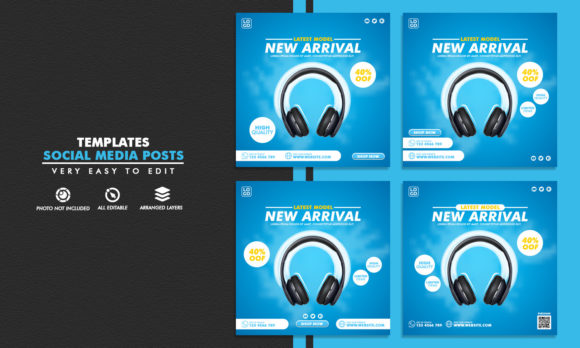
The utility of a Banner Template for the Latest Headset extends far beyond simple aesthetics; it acts as a structural backbone for your marketing operations. When preparing for a campaign, the initial phase involves asset gathering. Since the template notes that pictures are not included, this necessitates a deliberate step in your workflow: sourcing or shooting high-resolution imagery of the specific headset model. This separation of structure and content is actually a benefit. It forces the team to curate the best possible visuals before they are placed into the design, ensuring that the final output relies on quality photography rather than design tricks to hide mediocre assets.
Once the images are ready, the template's architecture comes into play. The specification of a 1500x1500 resolution indicates a square format, which is the gold standard for Instagram feeds, Facebook posts, and often LinkedIn updates. However, its application is not limited to social media. In a practical workflow, this square asset can be adapted for website thumbnails, email newsletter headers, or even digital catalog entries. By starting with a robust master file, you ensure that the core branding elements remain consistent regardless of where the image is eventually cropped or resized. This consistency builds brand recognition, a critical factor when consumers are comparing multiple headset options in a crowded marketplace.
Leveraging Editability for Rapid Iteration
One of the most significant advantages of using a template created in the latest Adobe Photoshop is the depth of editability. Modern design workflows demand agility. If a pricing strategy changes overnight or a new feature needs highlighting due to a competitor's move, you cannot afford to wait days for a designer to rebuild an ad. With a fully layered master file, all existing elements can be edited easily. This includes text layers for headlines and call-to-action buttons, shape layers for background accents, and smart objects for product placement.
For entrepreneurs and freelancers managing multiple clients, this efficiency translates directly to profitability. You can duplicate the master file four times—as indicated by the inclusion of 4 banners in one file—and create variations for A/B testing without altering the original structure. Perhaps one version emphasizes battery life with a bold typographic treatment, while another focuses on comfort with a softer color palette. The ability to toggle visibility, adjust blending modes, and swap fonts instantly allows for rapid experimentation. This iterative process is vital for optimizing click-through rates and conversion metrics, turning the banner from a static picture into a dynamic testing ground for marketing hypotheses.
Technical Considerations and Color Management
When implementing these templates, attention to technical specifications ensures professional results. The files utilize the RGB color mode, which is specifically optimized for digital screens. Unlike CMYK, which is reserved for print, RGB offers a wider gamut of colors, allowing the vibrant LEDs on a gaming headset or the sleek metallic finish of audiophile headphones to pop on mobile devices and monitors. Marketers must ensure that their exported files maintain this color integrity. When saving for web use, utilizing the "Save for Web" or "Export As" functions in Photoshop helps balance file size and quality, ensuring fast load times without sacrificing the crispness of the 1500x1500 resolution.
Typography also plays a crucial role in the effectiveness of the banner. The note regarding free fonts is a practical consideration for budget-conscious businesses and solo creators. It eliminates the barrier of entry caused by expensive licensing fees while ensuring that the design remains legally compliant for commercial use. However, it also places the responsibility on the user to install these fonts correctly before opening the PSD file. A smooth workflow involves verifying font compatibility immediately upon download. If a specific free font does not align with your brand guidelines, the editable nature of the file allows you to substitute it with a licensed alternative that matches the weight and style of the original, maintaining the intended visual hierarchy.
Workflow Scenarios for Different Professionals
Different professionals will integrate the Banner Template for the Latest Headset in unique ways depending on their specific goals. For an e-commerce store owner, the template might be used to create a cohesive grid on an Instagram profile, showcasing different angles of the same headset model. The four variations in the single file allow for a "carousel" effect, where users swipe through features like "Active Noise Cancellation," "30-Hour Battery," and "Premium Comfort." This narrative approach educates the customer within the feed itself, reducing the friction required to visit the product page.
For tech reviewers and bloggers, this template serves as a thumbnail generator for YouTube videos or header images for blog posts. By swapping the placeholder product image with their own review unit photo, they can maintain a consistent channel aesthetic while signaling to their audience that a new, high-profile device is being covered. The clean layout ensures that text overlays like "Review" or "First Impressions" are legible even on small mobile screens, which is where a vast majority of video consumption occurs.
Corporate marketers launching internal communications or B2B sales decks can also benefit. When pitching a new line of office headsets to enterprise clients, having polished, professional visuals ready to go enhances the perceived value of the proposal. The template provides a shortcut to high-end production values, allowing the sales team to focus on tailoring the pitch deck's narrative rather than spending hours on graphic design.
Ensuring Long-Term Usability and Organization
To truly maximize the return on investment for this digital asset, organization is key. Upon downloading the master file, it is advisable to establish a clear folder structure. Keep the original PSD untouched as a "Gold Master." Create copies for each specific campaign or date. Name layers logically if you plan to hand the file off to other team members or virtual assistants. Good file hygiene prevents confusion later when you need to locate a specific element or revert to a previous version of the design.
Furthermore, consider the longevity of the design trends used in the template. While the "latest" headset implies current technology, the design elements should be timeless enough to remain relevant for months, if not years. Avoid overly trendy effects that might date the advertisement quickly. Instead, rely on strong composition, clear typography, and high-quality imagery. This approach ensures that the Banner Template for the Latest Headset remains a viable part of your toolkit even as specific product models evolve.
In conclusion, integrating a professional banner template into your promotional workflow is a strategic decision that enhances efficiency, consistency, and overall quality. By understanding the technical specifications, leveraging the editability of modern Photoshop files, and adapting the asset to various stages of your marketing funnel, you can elevate your brand's visual presence. Whether you are a solo entrepreneur or part of a larger agency, these tools provide the structural support needed to execute campaigns with precision and impact, ultimately driving better engagement and sales for your audio products.