Maximizing Your Online Presence with a Fitness Social Media Banner and Web Template
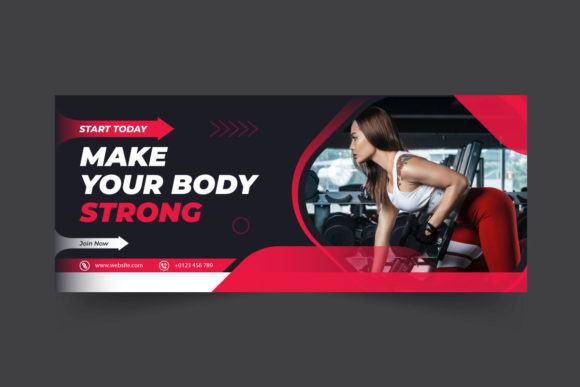
In the crowded digital landscape of health and wellness, first impressions happen in milliseconds. Whether you are launching a new personal training business, starting a nutrition blog, or simply trying to build a community around your yoga journey, the visual quality of your online assets dictates whether a visitor stays or scrolls past. This is where a dedicated Fitness Social Media Banner and Web Temp becomes an indispensable tool. It isn't just about having a pretty picture; it is about creating a cohesive brand identity that communicates professionalism, energy, and trust before you even say a word.
Many creators struggle with the technical aspects of design. They have the expertise in squats, meal prep, or mindfulness, but staring at a blank canvas in design software can be paralyzing. A pre-designed template bridges this gap. Specifically, a template sized at 1280×720 pixels offers the perfect versatility for modern platforms. This resolution is the standard for YouTube channel art, website headers, and even high-quality LinkedIn banners. By utilizing a file prepared at 300 DPI in RGB color, you ensure that your graphics look crisp on high-definition monitors and vibrant on mobile screens, avoiding the pixelated blur that often plagues amateur designs.
Real-World Applications for Diverse Users
The utility of a Fitness Social Media Banner and Web Temp extends far beyond just gym owners. Consider the freelance fitness photographer who needs to update their portfolio website. A flat design banner provides a clean, uncluttered backdrop that allows their action shots to pop without competing with busy graphical elements. Because the design is 100% customizable, they can easily swap out placeholder text for their specific niche, such as "Urban Athletic Photography" or "Natural Light Fitness Portraits," using the included free fonts that match their aesthetic.
Similarly, think about the corporate wellness coordinator organizing a virtual challenge for their company. They need to create excitement quickly without a budget for a graphic designer. Downloading a template that includes both EPS and JPEG formats allows them to edit the vector file for scalability if they need to print flyers later, while immediately deploying the JPEG version as a header on their internal communication portal or Zoom background. The ability to edit the file easily means they can update the banner weekly to reflect different challenges, like "Hydration Week" or "Step Count Showdown," keeping the content fresh and engaging for employees.
Educators and online course creators also benefit significantly. If you are selling a digital guide on post-partum recovery or a video series on calisthenics, your sales page header needs to convert visitors into buyers. A professional web template signals that the content behind the link is equally polished. When a potential student sees a cohesive, well-designed banner, it subconsciously assures them that the instructor pays attention to detail—a crucial trait when trusting someone with your physical health.
Why Technical Specifications Matter for Your Brand
You might wonder why specific file formats and resolutions are emphasized so heavily. The difference between a good impression and a great one often lies in these details. The inclusion of an EPS file is a game-changer for scalability. Unlike raster images that lose quality when enlarged, vector-based EPS files allow you to stretch your banner to fit a billboard or a massive trade show booth without any loss of clarity. This future-proofs your branding investment.
On the other hand, the JPEG version ensures compatibility. Not everyone has access to Adobe Illustrator or Inkscape. For the small business owner who manages their own social media on a tablet or through basic editing apps, having a high-quality JPEG that is ready to upload saves hours of frustration. The fact that the image is not included in the template is actually a strategic advantage. It forces you to choose imagery that is authentic to your brand. Instead of using generic stock photos of models that don't look like you or your clients, you are encouraged to insert real photos from your own studio, your local park, or your kitchen. This authenticity resonates deeply with audiences aged 20–50 who are increasingly skeptical of overly polished, fake-looking marketing.
Strategic Considerations Before You Start Editing
Before you dive into customizing your Fitness Social Media Banner and Web Temp, take a moment to strategize. The flat design style included in these templates is popular for a reason: it reduces visual noise. However, you must ensure that your chosen color palette aligns with your brand psychology. If you are promoting high-intensity interval training (HIIT), bold reds and oranges might convey energy and urgency. Conversely, if your focus is on meditation and restorative yoga, soft blues and greens will better communicate calm and balance.
Also, consider the platform hierarchy. While 1280×720 is a versatile standard, remember that different social media channels crop images differently. YouTube, for instance, displays a central "safe area" on mobile devices, while desktop users see the full width. When editing your template, keep critical information—like your business name, tagline, or upload schedule—within the center of the composition. This ensures that no matter how a user accesses your content, your core message remains visible.
Another practical tip involves typography. Since the template uses free fonts, you have the legal freedom to use them commercially without worrying about licensing fees. However, readability is key. Avoid pairing too many different font styles. Stick to one strong font for your main headline and a simpler, complementary font for secondary details like your website URL or social handles. The goal is to guide the viewer's eye, not confuse it.
Turning Templates into Business Growth
Ultimately, the value of a Fitness Social Media Banner and Web Temp lies in the time and mental energy it saves. As a creator or entrepreneur, your time is best spent coaching clients, developing workout programs, or engaging with your community. Wrestling with alignment tools and color codes detracts from those high-value activities. By leveraging a high-quality, easy-to-edit template, you reclaim that time.
Furthermore, consistency breeds recognition. When your YouTube banner, website header, and Facebook cover photo all share the same structural DNA, colors, and fonts, you build a recognizable visual language. Over time, followers begin to associate that specific look with your advice and personality. This brand recall is essential in the fitness industry, where trust is the primary currency. Whether you are a hobbyist sharing your weight loss transformation or a seasoned publisher launching a new health magazine, presenting a unified front makes your venture appear established and reliable.
In conclusion, investing in a robust design foundation is a smart move for anyone serious about their digital presence in the health sector. The combination of high-resolution output, flexible file formats, and a clean flat design aesthetic provides the perfect canvas for your unique story. By understanding how to leverage these features effectively, you can transform a simple graphic file into a powerful tool for connection, education, and business growth.