Elevate Your Feed with a Food Instagram Post and Story
In the visual world of social media, first impressions happen in a split second. Whether you are a home cook sharing a family recipe, a restaurant owner promoting a daily special, or a food blogger reviewing the latest café, the quality of your imagery dictates engagement. This is where a dedicated Food Instagram Post and Story template becomes an invaluable asset. It is not just about having a pretty picture; it is about presenting your culinary creations in a structured, professional manner that stops the scroll and invites interaction.
At its core, this type of template is a pre-designed framework built to showcase food photography effectively. Unlike generic design tools that require you to build layouts from scratch, these templates come with a well-organized structure where images, text, and colors are fully editable. The primary purpose is to bridge the gap between high-quality photography and cohesive branding. When you use a template specifically designed for food content, you ensure that your posts look consistent, which helps in building a recognizable identity on platforms like Instagram.
Why Structure Matters in Food Content
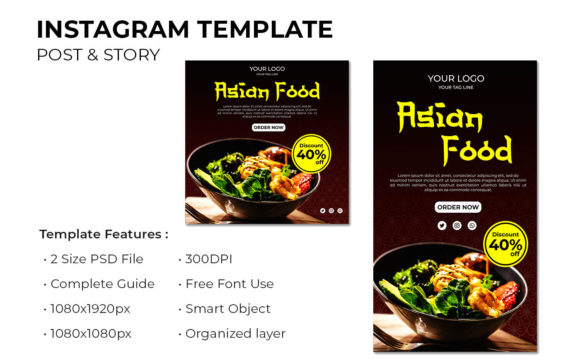
One of the most significant advantages of using a professionally crafted template is the underlying organization. In the context of design files, specifically PSDs, organization is key to efficiency. A high-quality Food Instagram Post and Story template features layers that are grouped and named logically. This means you aren't digging through a chaotic list of unnamed layers to find the text box or the image placeholder. Instead, everything is layer by name group, allowing you to locate elements instantly.
Furthermore, the image containers in these templates are often set up as Smart Objects. This is a critical feature for anyone who wants to edit files quickly and easily. With Smart Objects, you do not need to worry about resizing, cropping, or distorting your photos manually. You simply double-click the smart object, paste your new food photo, save it, and the template automatically adjusts the image to fit the designated space perfectly. This preserves the original quality of your photo while adhering to the design's aesthetic, ensuring your dish looks appetizing rather than stretched or pixelated.
Practical Applications for Creators and Businesses
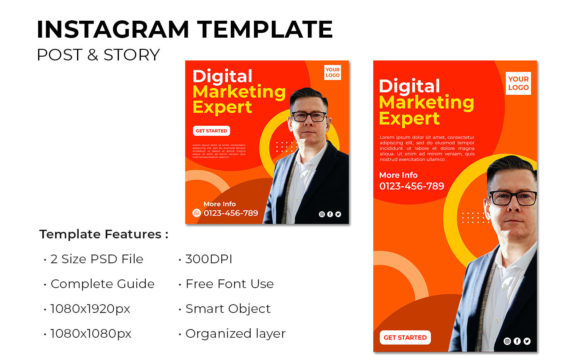
The versatility of these templates makes them suitable for a wide range of users, from beginners to seasoned marketing professionals. Consider a small bakery that needs to announce a new seasonal menu. Using a template with dimensions of 1080×1080 px for the feed and 1080x1920 px for stories ensures that the graphics look sharp on all devices. The baker can swap out the placeholder image for a photo of their new cinnamon rolls, change the text to reflect the price and ingredients, and adjust the color palette to match the warm tones of the pastry—all within minutes.
For food bloggers and influencers, consistency is the currency of growth. By utilizing a template that includes a help file and uses free fonts, creators can maintain a uniform look across hundreds of posts without needing advanced graphic design skills. You might use one layout for recipe carousels, another for quote graphics about healthy eating, and a vertical version for behind-the-scenes story updates. The ability to fully edit colors means you can align every post with your specific brand guidelines, whether your vibe is rustic and earthy or modern and vibrant.
Entrepreneurs and marketers also benefit significantly. When running a promotional campaign, time is often of the essence. Having a library of organized, easy-to-edit templates allows a marketing team to churn out high-quality content rapidly. Whether it is a flash sale, a customer testimonial, or a holiday greeting, the framework is already there. You simply plug in the relevant content. This efficiency allows businesses to focus more on the food and the customer experience rather than getting bogged down in design logistics.
Key Features That Enhance Workflow
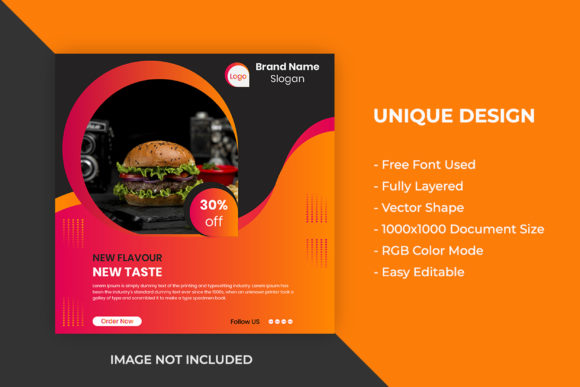
When selecting a template, certain technical specifications can make the difference between a frustrating experience and a seamless one. A top-tier Food Instagram Post and Story resource will typically offer files in RGB color mode at 300 DPI. While screen display usually requires 72 DPI, having a higher resolution source file ensures that your images remain crisp even if they are repurposed for print menus or high-resolution displays later on.
- Easy to Edit: The interface should be intuitive, allowing users to make changes without a steep learning curve.
- Layered and Organized: As mentioned, clear grouping of layers saves time and reduces errors during the editing process.
- Free Font Usage: Templates that utilize freely available fonts ensure that you do not incur extra costs or face licensing issues when sharing your designs commercially.
- Smart Object Integration: This feature automates the resizing and masking of images, protecting the integrity of your photography.
It is important to note that while these templates provide the structure, the soul of the content comes from your own photography. Most templates do not include the actual food images; you are expected to use your own photos. This is actually a benefit, as it allows for complete authenticity. Your audience connects with real food from real kitchens, not generic stock photography. The template serves as the frame, but your unique perspective provides the art.
Considerations Before You Begin
Before diving into editing, there are a few practical things to consider. First, ensure you have access to software capable of opening PSD files, such as Adobe Photoshop. While there are alternative tools, the full functionality of smart objects and layer groups is best experienced in the native environment. Second, think about your lighting and photography style. A template can enhance a good photo, but it cannot fix a poorly lit one. Investing time in capturing clear, well-lit images of your dishes will maximize the impact of the template.
Additionally, consider the platform specifics. Instagram feeds and stories have different aspect ratios and user behaviors. A square post is great for detailed shots and captions, while a vertical story is ideal for quick, engaging updates and direct calls to action. Using a bundle that offers both formats ensures you have the right tool for every part of your strategy. Always review the help file included with the template; it often contains tips on how to best utilize the smart objects and where to download the specific free fonts used in the design.
Ultimately, adopting a Food Instagram Post and Story template is about working smarter, not harder. It empowers you to present your culinary passion or business with a level of polish that rivals major brands. By leveraging organized layers, smart editing features, and flexible design elements, you can create a visually stunning presence that resonates with your audience. Whether you are posting a simple breakfast snap or a complex multi-course dinner spread, the right template provides the foundation you need to let your food shine.