Boost Your Restaurant's Reach with a Vibrant Food Promotional Social Media Post
In the fast-paced world of digital dining, the first bite happens with the eyes. A Food Promotional Social Media Post is more than just a picture of a dish; it is a strategic visual tool designed to stop the scroll, trigger an appetite response, and drive immediate action from potential customers. Whether you are running a cozy café, a high-end bistro, or a bustling food truck, the ability to communicate your brand's flavor profile instantly through social media can make or break your daily foot traffic. The modern diner doesn't just look for food; they look for an experience, and your social media presence is the digital storefront where that experience begins.
Imagine walking past a restaurant window. If the display is dull or cluttered, you keep walking. If it is vibrant, colorful, and showcases something delicious, you pause. The same psychology applies online. A well-crafted promotional post acts as that inviting window display. It leverages color theory, composition, and clear messaging to tell a story about freshness, taste, and atmosphere. When these elements come together in a template that is both professional and adaptable, businesses gain a significant advantage in capturing attention in crowded feeds dominated by influencers and competing brands.
Real-World Scenarios Where Visual Impact Matters
The utility of a high-quality Colorful Restaurant Food Promotional Social Media Post Template extends far beyond simply announcing a new menu item. Different industries and business stages require different approaches, yet the core need for striking visuals remains constant. Consider a local bakery launching a seasonal pumpkin spice line. Using a template with warm, autumnal tones and editable text fields allows them to pivot their branding overnight without hiring a graphic designer. They can highlight the limited-time nature of the offer, creating a sense of urgency that drives morning rushes.
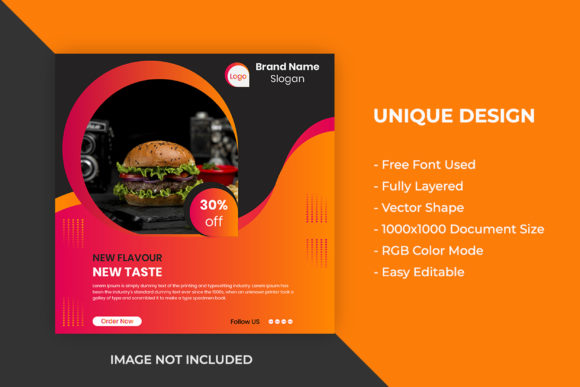
Similarly, food trucks operating in competitive urban environments rely heavily on location updates and daily specials. A template sized perfectly at 1000x1000 PX ensures that whether a customer is viewing the post on a smartphone while commuting or on a desktop at work, the image remains crisp and legible. The RGB color mode guarantees that the vibrant reds of a burger or the fresh greens of a salad pop on screen exactly as intended, maintaining the appetizing quality that is often lost in poor-quality uploads.
For established restaurants looking to promote event nights, such as trivia Tuesdays or live music weekends, the flexibility of an AI EPS File becomes invaluable. These vector-based files allow for infinite scaling and editing. A marketing manager can easily swap out the background image from a pasta dish to a cocktail glass, adjust the font to match the event's vibe, and update the time and date, all within minutes. This agility means the restaurant can react to real-time trends, weather changes, or inventory surplus without delaying their promotional cycle.
Diverse Audiences and Tailored Benefits
The beauty of using a customizable design lies in its ability to speak to various segments of your audience simultaneously. Younger demographics, particularly those aged 20 to 35, are highly visual and often make dining decisions based on "Instagrammability." A post that utilizes bold colors and dynamic layouts signals that your establishment is trendy and aware of current aesthetics. For this group, the shareability of the content is key; if the post looks good, they will share it to their stories, effectively becoming brand ambassadors.
On the other hand, older demographics or families might prioritize clarity and information. They want to know the price, the ingredients, and the availability. An editable template allows you to balance style with substance. You can maintain the colorful, engaging backdrop that grabs attention while ensuring the text overlay is clean, readable, and informative. This dual approach ensures that your Food Promotional Social Media Post resonates with a broad spectrum of diners, from the trend-seeking influencer to the parent looking for a reliable dinner spot.
Franchise owners also benefit significantly from standardized yet flexible templates. Maintaining brand consistency across multiple locations is a common challenge. By providing each branch with the same base template file, corporate teams ensure that logos, fonts, and color palettes remain uniform. However, because the design is easy to edit, local managers can still customize specific details like store hours or local phone numbers. This strikes a perfect balance between global brand identity and local relevance.
Practical Considerations Before You Start Designing
While the availability of a pre-made template simplifies the process, there are several factors to consider to maximize its effectiveness. First, understand the importance of the RGB Color Mode. Unlike print materials that use CMYK, social media platforms display images using light (Red, Green, Blue). Ensuring your file is set to RGB prevents colors from looking dull or shifted when uploaded to Instagram, Facebook, or TikTok. A vibrant orange in print might look muddy on a screen if the color mode isn't correct, killing the appetite appeal of the food.
Secondly, consider the aspect ratio. The standard 1000x1000 PX size is ideal for square posts, which occupy the maximum amount of screen real estate on mobile feeds without requiring the user to tap to expand. This immediate visibility increases the likelihood of engagement. However, always keep in mind the "safe zones" for text. When editing the template, ensure that crucial information like prices or call-to-action buttons does not get cut off by interface elements like the "like" button or caption text on different devices.
Another critical consideration is the quality of the photography you insert into the template. Even the best-designed frame cannot save a blurry or poorly lit photo. Since the template is designed to be colorful and vibrant, pair it with high-resolution images that have good contrast and saturation. The template provides the structure, but your food photography provides the soul. If possible, use natural lighting when shooting your dishes to complement the RGB settings of the digital file.
Strengths and Limitations of Template-Based Design
The primary strength of using an Easy Customizable and Editable Design is efficiency. In the restaurant industry, time is a scarce resource. Chefs and managers are focused on operations, service, and food quality. Spending hours learning complex design software is rarely feasible. A template bridges this gap, offering professional-grade aesthetics with a minimal learning curve. It democratizes design, allowing small business owners to compete visually with large chains that have dedicated marketing departments.
Furthermore, the AI EPS File format offers technical superiority over flat image files. It allows for non-destructive editing. You can change colors, move elements, and resize graphics without losing quality. This future-proofs your marketing assets; a template bought today can be tweaked and reused for years, adapting to changing seasons, holidays, and menu evolutions.
However, there are limitations to be aware of. The ease of use can sometimes lead to overuse. If every single post looks exactly the same, your feed may become predictable and fail to generate excitement. It is essential to vary the content within the template. Change the angles of the food photos, rotate the color accents, and experiment with different headline placements. Additionally, while templates provide a great starting point, they should not replace a cohesive overall brand strategy. The template is a tool, not a strategy in itself. It must align with your voice, your values, and your specific customer base.
Ultimately, leveraging a Colorful Restaurant Food Promotional Social Media Post Template is about empowering your business to tell its story effectively. It removes the technical barriers to entry, allowing you to focus on what you do best: creating amazing food. By understanding how to adapt these tools to real-world scenarios, respecting the technical nuances of digital color and sizing, and balancing consistency with creativity, you can turn a simple social media update into a powerful driver of business growth. The right visual doesn't just show food; it invites people in, making them feel hungry, welcome, and eager to visit.