Prevention of Covid-19 Vaccine Social Media: A Guide to Effective Health Communication
In the digital age, public health messaging has shifted dramatically from traditional billboards and television spots to the dynamic, fast-paced world of social media. The concept of Prevention of Covid-19 Vaccine Social Me represents a critical evolution in how we disseminate life-saving information. It is not merely about posting an image; it is about creating a visual narrative that encourages vaccination, promotes protective measures, and fosters a sense of community responsibility. As we navigate the ongoing challenges of the pandemic and prepare for future health crises, understanding how to leverage vector illustrations, editable banners, and clear iconography is essential for organizations, healthcare providers, and community leaders aiming to increase the attractiveness of their message to visitors.
The Challenge of Digital Health Literacy
The primary challenge facing health communicators today is information overload. Social media feeds are saturated with content, making it difficult for crucial safety guidelines to stand out. When users scroll through their feeds, they encounter a mix of news, entertainment, and misinformation. In this environment, a generic text post about coronavirus symptoms or vaccine availability often gets lost. The goal is to cut through the noise with visuals that are instantly recognizable, trustworthy, and actionable.
Many organizations struggle with the technical aspects of design. They may have the right message but lack the resources to create high-quality graphics that look professional on every device. This is where ready-to-use, fully editable templates become invaluable. By utilizing resources that include vector line icons and layered files, even those without advanced graphic design skills can produce compelling campaigns. The need is for clarity: people need to see exactly what is expected of them, whether it is wearing a medical mask, keeping physical distance, or scheduling a vaccination appointment.
Visualizing Safety Through Vector Illustrations
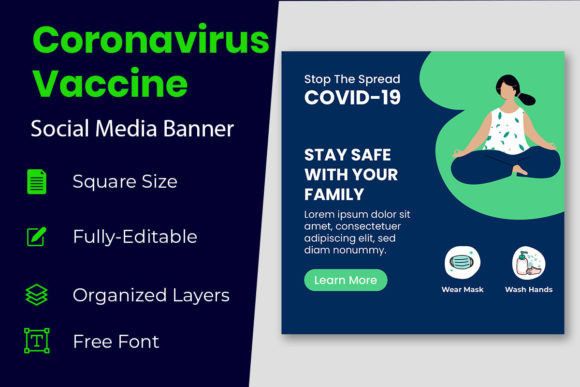
Vector illustrations offer a unique advantage in health communication. Unlike pixel-based images that can become blurry when resized, vector graphics remain crisp and clear on any screen, from a smartphone to a large desktop monitor. A well-designed Coronavirus Protection Related Vector Line Icon set allows creators to depict complex ideas simply. For instance, an icon showing a person wearing a protective medical mask conveys the message of prevention instantly, transcending language barriers.
These visual elements serve as the building blocks for effective banners. When designing a campaign focused on the Prevention of Covid-19, the use of consistent iconography helps build brand recognition and trust. If a community health group uses a specific style of vector art to represent "keeping distance for infection risk," their audience will soon associate that visual style with reliable advice. This consistency is key to reducing anxiety and confusion. Furthermore, vector files often come in multiple formats such as PSD, AI, EPS, and PDF, ensuring compatibility with various design software. This flexibility means that a local clinic can take a global design template and customize it with their specific logo, contact information, and local guidelines without losing quality.
Customization and Adaptability for Diverse Audiences
One size does not fit all in public health. A message that resonates with young adults on Instagram may need a different tone and visual approach for seniors reading a newsletter or viewing a Facebook community page. The beauty of using full editable design templates lies in their adaptability. With features like 100 layered structures and RGB color modes, designers can easily tweak colors to match organizational branding or adjust the layout to highlight specific calls to action.
For example, a school district might use a bright, friendly color palette to encourage students to follow hygiene protocols, while a hospital might opt for a more serious, clinical aesthetic to discuss vaccine efficacy. The ability to edit text and swap out icons means that the core message—Stop Covid-19 concept—remains constant, but the delivery is tailored to the specific needs of the audience. This level of customization ensures that the content feels relevant and personal, which significantly increases engagement rates.
Moreover, these resources often include help guides and information files, making them accessible to non-designers. A volunteer coordinator at a community center can open a PSD file, change the date of a vaccination drive, and export a print-ready PDF within minutes. This democratization of design tools empowers more voices to join the conversation, spreading accurate information faster than ever before.
Practical Applications and Outcomes
Implementing high-quality visual assets leads to tangible outcomes. When social media banners are visually appealing and easy to understand, click-through rates increase. Users are more likely to share content that looks professional and informative, thereby expanding the reach of the campaign organically. This "shareability" is crucial for viral health messages.
Consider a scenario where a city launches a new booster shot initiative. By deploying a series of cohesive social media banners featuring clear Protective Measures and Coronavirus Symptoms icons, the city can educate the public while driving traffic to registration pages. The visual cues act as reminders in the user's daily digital routine. Over time, repeated exposure to these positive, solution-oriented images reinforces healthy behaviors. People begin to normalize mask-wearing and social distancing not because they are forced to, but because they see it represented as a standard, caring community practice.
Additionally, these designs are not limited to digital screens. Because the files are available in high-resolution formats like EPS and PDF, the same artwork can be used for printed flyers, posters in waiting rooms, or informational brochures. This omnichannel approach ensures that the message is consistent whether the patient is online or offline, reinforcing the importance of the Prevention of Covid-19 Vaccine efforts.
Recommendations for Implementation
To maximize the impact of your health communication strategy, start by auditing your current visual assets. Are they clear? Are they up to date? If you are relying on low-resolution images or cluttered designs, it may be time to invest in professional-grade templates. Look for resources that offer comprehensive file types (PSD, AI, EPS, PDF) and include a variety of icons covering different aspects of the pandemic, from symptoms to prevention methods.
When customizing these templates, keep the design clean. Use white space effectively to draw attention to the most important information, such as the location of a vaccination site or the steps to take if symptoms appear. Ensure that the fonts used are legible on small screens. If a template includes a link to free fonts, make sure to install them correctly to maintain the intended aesthetic.
It is also vital to stay empathetic in your messaging. The pandemic has been a source of stress for many. Your visuals should convey hope and solidarity rather than fear. Images of people safely interacting, wearing masks with confidence, and receiving vaccines can help alleviate anxiety and encourage participation.
Conclusion
The fight against infectious diseases is as much about communication as it is about medicine. By embracing tools that facilitate the Prevention of Covid-19 Vaccine Social Me initiative, we empower ourselves to spread truth and safety. High-quality, editable vector illustrations and banner designs are not just decorative elements; they are essential instruments in the public health toolkit. They allow us to clarify complex guidelines, reach diverse audiences, and foster a culture of care and prevention. Whether you are a graphic designer, a healthcare administrator, or a community advocate, leveraging these resources can help you create impactful campaigns that save lives. As we move forward, let us continue to prioritize clear, attractive, and accessible communication to protect our communities and build a healthier future.