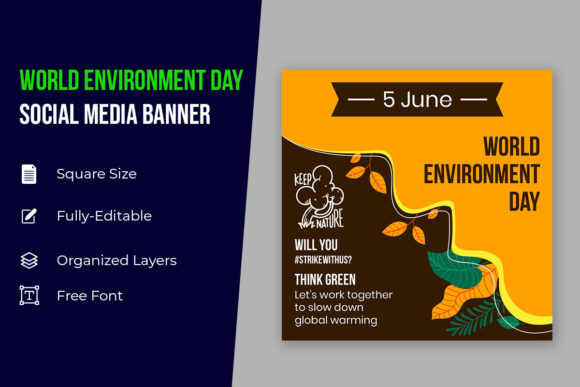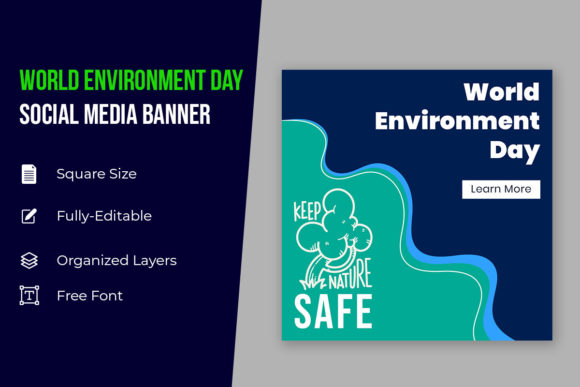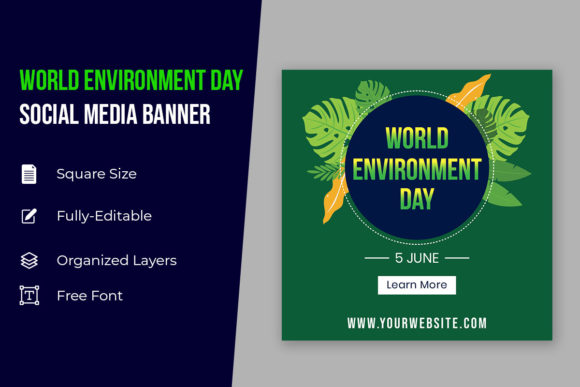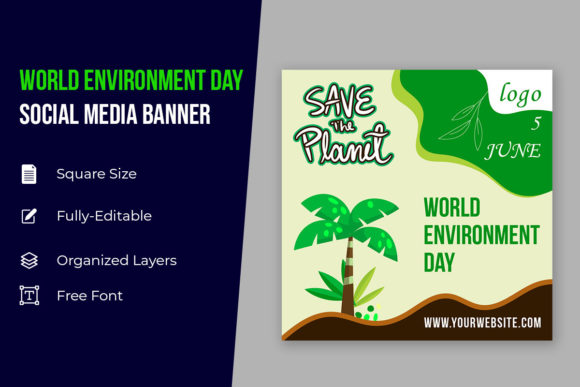
Integrating World Environment Day Tree Illustration into Your Digital Workflow
In the fast-paced world of digital marketing and content creation, timing and visual impact are everything. As June 5th approaches, brands, educators, and creators scramble to produce meaningful content for World Environment Day. The challenge often lies not in the intent but in the execution. How do you create a professional, eye-catching campaign without spending days designing from scratch? This is where a high-quality World Environment Day Tree Illustration becomes more than just an image; it becomes a strategic asset in your creative workflow.
Utilizing a pre-designed, fully editable vector illustration allows you to bypass the initial conceptualization phase and move straight to customization and distribution. Whether you are a small business owner looking to highlight your sustainability efforts, a social media manager planning a month-long campaign, or an educator creating materials for students, integrating these assets streamlines your process significantly.
The Strategic Value of Editable Vector Assets
When planning a campaign around the World Environment Day concept, the core message usually revolves around nature, conservation, and the future of our planet. A "Green Eco Earth" motif with a central tree element is a universal symbol that resonates across cultures. However, using a generic stock photo often leads to a diluted brand presence. A dedicated World Environment Day vector illustration offers a unique solution because it is built for adaptation.
The primary advantage of working with files that include PSD, AI, EPS, and PDF formats is compatibility. In a professional workflow, you rarely work in just one application. You might draft copy in a word processor, design layouts in Adobe Illustrator, tweak photos in Photoshop, and export final assets for web use. Having access to all these file types ensures that the illustration fits seamlessly into whatever software stack your team uses.
For instance, if your team prefers working with layers and complex masking, the PSD file is indispensable. It allows you to isolate specific elements of the tree or the earth background to place text behind foliage or integrate product shots within the greenery. Conversely, if you need to scale the graphic for a large format print or a billboard without losing quality, the AI and EPS files provide the necessary vector scalability. This flexibility prevents the common bottleneck of having to recreate assets for different mediums.
Workflow Integration: From Planning to Publication
Integrating a World Environment Day background or card design into your project lifecycle requires a structured approach. Here is how these assets fit into the broader timeline of a campaign:
Phase 1: Preparation and Customization
Before you even open the design file, your preparation phase involves defining the specific angle of your message. Are you focusing on reforestation, plastic reduction, or carbon neutrality? Once the message is clear, you can open the provided 1080×1080 Pixels file. This square format is optimized for social media platforms like Instagram, Facebook, and LinkedIn, which simplifies the initial setup.
Because the main elements are editable Smart Objects, you can swap out placeholder graphics with your own branding. If your company logo features specific colors that differ from the standard green palette, you can adjust the hue/saturation layers directly. The fact that the design is 100 Layered means you have granular control. You aren't stuck with a flat image; you can rearrange the composition to ensure your call-to-action (CTA) stands out against the Green Eco Earth backdrop.
Phase 2: Content Adaptation
During the production phase, efficiency is key. A common mistake is treating a template as a static image. Instead, use the World Environment Day card structure as a base for multiple variations. Since the file resolution is set at 72 DPI in RGB color mode, it is ready for digital deployment immediately.
- Social Media Posts: Use the base illustration to create a series of posts. Change the text overlay daily to highlight different environmental facts while keeping the visual consistency of the tree illustration.
- Email Headers: Export the top portion of the design to serve as a header for your newsletter, ensuring your internal communications align with your public-facing social media.
- Blog Graphics: Incorporate the vector elements into blog post featured images. Because you have the AI and EPS files, you can extract the tree icon alone to use as a bullet point or section divider within your article layout.
This level of adaptability ensures that your visual identity remains consistent across all touchpoints, reinforcing brand recognition while delivering your environmental message.
Phase 3: Quality Control and Deployment
Before publishing, the layered nature of the files aids in quality control. You can toggle visibility on different layers to check contrast ratios, ensuring that text is readable for users with visual impairments—a crucial aspect of inclusive design. The inclusion of a Help File and Information File in the package further supports this stage by providing guidance on font usage or specific layer functions, reducing the learning curve if a new team member is handling the design.
Once finalized, the export process is straightforward. The PDF file included in the package can be used for digital proofs shared with stakeholders who may not have design software installed, allowing for quick approval cycles. After approval, the high-resolution PNGs exported from the PSD or AI files are ready for scheduling via tools like Buffer, Hootsuite, or native platform schedulers.
Maximizing Usability and Long-Term Value
While the immediate goal is to celebrate World Environment Day, the utility of these assets extends beyond a single day. A well-constructed World Environment Day vector illustration serves as a evergreen resource. The "tree" and "earth" motifs are not date-specific unless you explicitly add the year to the text layer. By keeping the text on a separate, editable layer, you can reuse the core artwork for future campaigns, Earth Day events, or general sustainability reports.
Furthermore, the organization of the file impacts long-term usability. A design that is Full Editable implies a logical naming convention for layers and groups. When you revisit the project six months later to plan next year's campaign, you won't waste time deciphering which layer controls the shadow or the leaf gradient. This organizational discipline saves hours of labor in the long run.
For freelancers and agencies, offering clients a cohesive look that includes a professional World Environment Day background adds value to your service package. It demonstrates attention to detail and the ability to leverage high-quality resources to elevate a client's brand perception. The ability to deliver multiple formats (PSD, AI, EPS, PDF) also caters to clients with varying technical capabilities, making you a more versatile partner.
Practical Tips for Implementation
To get the most out of these resources, consider the following practical observations:
- Maintain Color Consistency: While the default green palette is effective, ensure it aligns with your brand guidelines. Use the editable layers to shift the greens slightly warmer or cooler to match your existing brand identity without losing the "eco" feel.
- Optimize for Mobile: Even though the source file is 1080x1080, always preview your designs on mobile devices. Text that looks clear on a desktop monitor might be too small on a smartphone screen. Utilize the smart objects to resize text blocks independently if needed.
- Leverage the Vector Data: Don't ignore the AI and EPS files even if your primary output is raster (JPEG/PNG). Use the vector paths to create cut-out effects or to generate SVG versions for web use, which load faster and remain crisp on high-DPI retina displays.
- Contextualize the Message: The illustration provides the visual hook, but your copy provides the context. Ensure the text you overlay complements the imagery. If the tree represents growth, talk about business growth through sustainable practices. If the earth represents fragility, discuss careful resource management.
Conclusion
Incorporating a World Environment Day Tree Illustration into your workflow is a practical decision that balances aesthetic quality with operational efficiency. By utilizing files that are fully layered, customizable, and available in multiple industry-standard formats, you eliminate technical barriers and focus on what matters: communicating your message effectively.
Whether you are increasing the attractiveness of your visitors through engaging social media posts or creating educational materials, these assets provide the foundation for a professional output. The ease of customization ensures that the final result feels bespoke to your brand, while the robust file structure supports a smooth, error-free production process. In a digital landscape where attention is scarce, having the right tools to execute your vision quickly and beautifully is the ultimate competitive advantage.