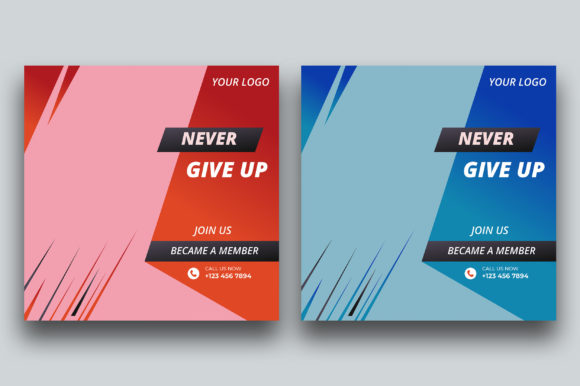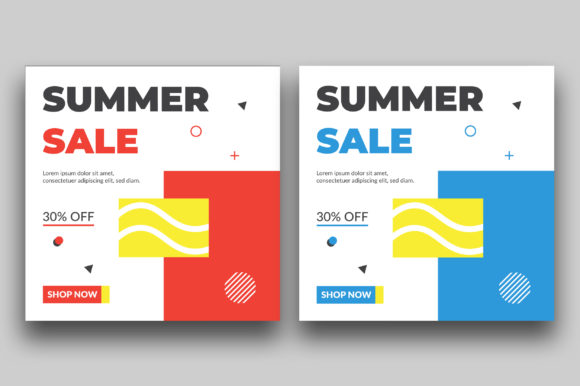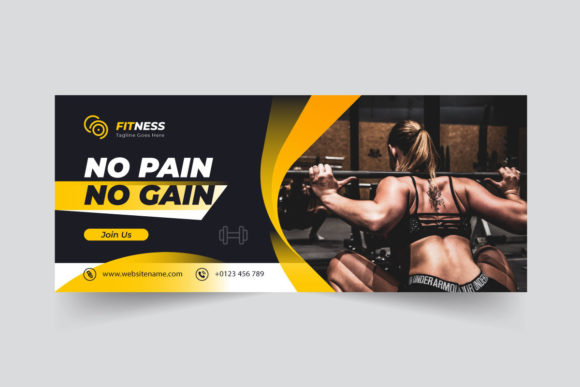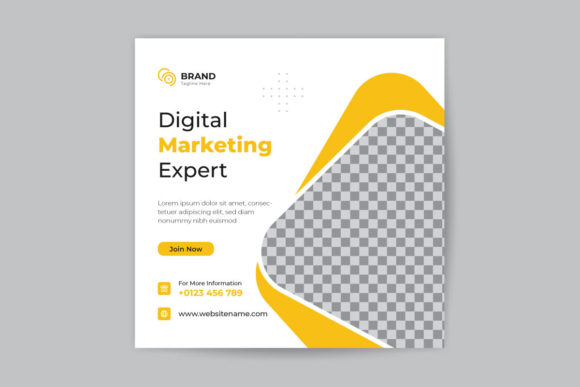
Evaluating the Digital Marketing Social Media Template for Professional Content Creation
In the fast-paced world of online promotion, consistency and visual quality are non-negotiable. Marketers, small business owners, and content creators often find themselves torn between hiring a graphic designer for every post and using generic, overused tools that dilute their brand identity. This is where a specialized Digital Marketing Social Media Template becomes a critical asset. Unlike standard drag-and-drop builders or fully custom design projects, these templates offer a middle ground: professional structure with the flexibility to adapt quickly to daily needs.
When assessing resources for your marketing stack, it is essential to understand what distinguishes a high-quality template package from the myriad of free options available online. A robust template set is not just about aesthetics; it is about workflow efficiency, technical specifications, and long-term scalability. By examining the specific features—such as resolution, file formats, and editability—you can determine if this approach aligns with your current operational capacity and future growth goals.
Technical Specifications and Their Impact on Quality
The foundation of any effective visual asset lies in its technical construction. A premium Digital Marketing Social Media Template typically adheres to strict industry standards to ensure clarity across devices. For instance, a canvas size of 1280×720 pixels is a strategic choice. While many platforms now support higher resolutions, this dimension offers an optimal balance between file weight and sharpness, particularly for landscape-oriented content on LinkedIn, Twitter (X), YouTube thumbnails, and Facebook shared links. It ensures that text remains legible without requiring excessive loading times, which can negatively impact user engagement.
Furthermore, the color mode and resolution are pivotal. Templates designed with RGB Color profiles are specifically optimized for digital screens, ensuring that the vibrant hues you see on your monitor translate accurately to mobile devices and desktops. The inclusion of 300 DPI (dots per inch) might seem like overkill for screen-only media, but it provides a significant advantage: versatility. If you decide to repurpose a social graphic for a printed flyer, a presentation slide, or a high-resolution PDF report, the source file retains enough detail to look crisp in print. Lower resolution files often pixelate when scaled up, limiting their utility to a single channel.
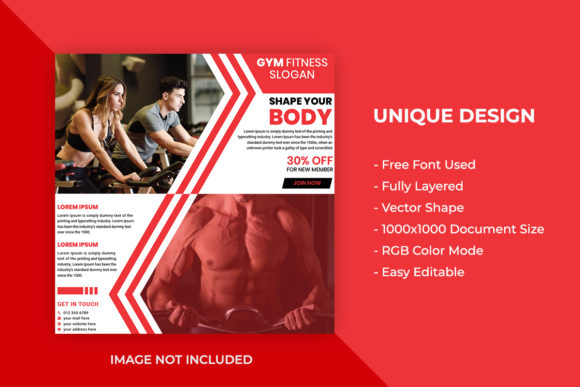
It is also important to note that while the template structure is provided, the image is not included. This is a standard practice in professional design resources. It forces the user to select imagery that is relevant to their specific campaign rather than relying on stock photos that thousands of other businesses might be using simultaneously. This separation of structure and content encourages more thoughtful curation of visual assets.
Comparing Editability: Vector vs. Raster Workflows
One of the most significant decision factors when choosing a design resource is the file format and how it impacts your editing workflow. A comprehensive Digital Marketing Social Media Template package usually includes both EPS and JPEG files. Understanding the distinction between these formats is crucial for determining if this tool fits your skill set.
The EPS (Encapsulated PostScript) file is a vector-based format. This means the design elements—shapes, lines, and text—are defined by mathematical paths rather than fixed pixels. The primary benefit here is infinite scalability and layer control. If you have access to software like Adobe Illustrator or compatible vector editors, you can manipulate individual components without losing quality. You can change the curvature of a shape, adjust the stroke width, or rearrange layout elements entirely. This level of control is ideal for brands that need to strictly adhere to complex style guides or those that want to create variations of a single concept without starting from scratch.
Conversely, the JPEG inclusion serves as a quick-start option or a reference layer. While JPEGs are raster images (made of pixels) and are harder to edit without degrading quality, they are universally compatible. Some users may prefer to import the JPEG into a photo editor as a background and overlay new text, though this limits flexibility. The presence of both formats acknowledges that users have different software capabilities. However, to truly leverage the "Easy to Edit" promise, utilizing the vector EPS file is recommended.
When comparing this to browser-based design tools, the difference lies in ownership and dependency. Online builders lock you into their ecosystem; if the service changes its pricing model or shuts down, your ability to edit past designs may vanish. With a downloadable Digital Marketing Social Media Template, you own the source file. You can edit it five years from now on any computer with the right software, independent of internet connectivity or subscription status.
The Advantage of Flat Design and Free Fonts
Design trends fluctuate, but Flat Design has remained a staple in digital marketing for good reason. This style emphasizes minimalism, clean lines, and bold colors, avoiding unnecessary textures, gradients, or drop shadows. A template utilizing flat design is not only aesthetically modern but also functionally superior for social media. On small mobile screens, intricate details often get lost. Flat design ensures that the core message and call-to-action remain the focal point.
Additionally, the requirement that Free Fonts are used is a critical feature for practical usability. Nothing halts a workflow faster than opening a file and being greeted by dozens of "missing font" error messages. When a template relies on open-source or freely available typography, it removes the barrier of purchasing expensive licenses or hunting down obscure typefaces. This ensures that the design looks exactly as intended immediately upon opening, maintaining the integrity of the layout. It also simplifies collaboration; if you outsource editing to a freelancer or hand files to a team member, they won't need to invest in new software or fonts to make adjustments.
Scalability and Customization Potential
The claim of being 100% customizable is often thrown around loosely in marketing materials, but in the context of a well-structured template, it refers to the modularity of the design. A high-quality package allows you to swap color palettes to match seasonal campaigns, replace placeholder icons with product-specific graphics, and rewrite copy to suit different audiences—all without breaking the layout.
Consider a scenario where a business needs to run a week-long promotional campaign. With a rigid design tool, creating seven unique posts might require seven separate projects. With a flexible Digital Marketing Social Media Template, you can duplicate the master EPS file, alter the accent colors for each day, update the headline, and export a fresh JPEG in minutes. This scalability is vital for maintaining a consistent posting schedule, which algorithms favor.
However, customization does require a baseline level of design literacy. While these templates are "easy to edit" compared to building from a blank canvas, they are not magic buttons. Users must still possess an eye for alignment, contrast, and hierarchy. If the replacement image chosen is low quality or the new text is too verbose, the template cannot fix those fundamental content errors. Therefore, this resource is best suited for individuals who have some familiarity with design principles or are willing to learn the basics of vector manipulation.
When to Choose This Approach Over Alternatives
Deciding whether a Digital Marketing Social Media Template is the right fit depends largely on your volume of content and brand maturity. If you are a startup needing to establish a visual identity quickly without the budget for a full-time designer, this is an excellent entry point. It provides a professional polish that free, generic generators often lack, thanks to the high-resolution output and vector precision.
On the other hand, if your brand strategy relies heavily on complex motion graphics, 3D rendering, or highly illustrative custom art for every post, a static template might feel restrictive. Similarly, if you require real-time collaboration where multiple team members edit the same file simultaneously in a cloud environment, a desktop-based EPS workflow might introduce friction compared to SaaS platforms.
Ultimately, the value of this resource lies in its balance. It offers the structural integrity of professional design with the autonomy of self-editing. By providing files that are resolution-independent, color-accurate, and typographically accessible, it empowers marketers to produce high-caliber visuals consistently. Whether you are managing a corporate LinkedIn page or promoting a local event, having a reliable, editable foundation allows you to focus less on the mechanics of design and more on the strategy behind the message.