Customize Your Furniture Web Banners Easily
In the fast-paced world of digital marketing and interior design promotion, visual communication is everything. Whether you are launching a new collection, announcing a seasonal sale, or simply updating your portfolio, the first thing a visitor sees is often a banner. This is where a Furniture Editable Web Banner Template becomes an invaluable asset. It serves as a foundational canvas, pre-designed with professional aesthetics but left open for your specific branding needs. Instead of starting from a blank screen or hiring a graphic designer for every minor update, this tool allows you to step in and make the design your own immediately.
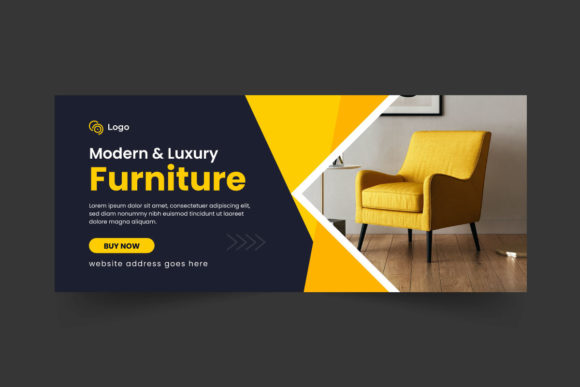
The template typically comes in a standard high-definition size of 1280×720 pixels, ensuring it looks crisp on most desktop monitors and fits perfectly within website headers or social media cover spaces. With a resolution of 300 DPI and RGB color mode, the graphics are optimized for screen viewing, providing vibrant colors that make wood grains, fabric textures, and metallic finishes pop. While the image of the furniture itself is not included—giving you the freedom to insert your own product photography—the structure is ready to go. It utilizes free fonts, meaning you do not need to purchase expensive licenses or worry about compatibility issues when sharing files with team members.
Why Different Users Value Flexibility
The appeal of an editable template lies in its versatility, but what "versatility" means changes depending on who is holding the mouse. For a seasoned graphic designer, the inclusion of an EPS (Encapsulated PostScript) file is the primary draw. This vector-based format ensures that every line, shape, and text box can be manipulated without losing quality. They appreciate the flat design file included because it strips away unnecessary effects, allowing them to build complex layers or integrate the banner into a larger brand identity system seamlessly.
Conversely, a small business owner or a furniture retailer might care less about vector nodes and more about speed and ease of use. For them, the JPEG version or the ability to quickly swap text in a familiar editor is paramount. They need to announce a "Summer Clearance" event by noon, and a template that is 100% customizable allows them to do just that without a steep learning curve. The fact that free fonts are used removes a significant barrier; there is no friction in downloading missing typefaces, which often stalls projects for non-designers.
Practical Applications for Various Creators
Understanding how different groups utilize this resource helps clarify whether it is the right fit for your current project. Let's explore how specific audiences might approach this tool:
- Freelance Marketers: If you manage social media accounts for multiple interior design firms, consistency is key. You can use the template to create a cohesive look across different clients by simply changing the color palette to match each brand's logo. The flat design elements serve as a neutral background that lets the client's unique furniture photos take center stage.
- Educators and Bloggers: Those teaching interior design trends or writing about home decor need visuals that are engaging but not distracting. A clean, editable banner allows them to highlight specific topics, such as "Minimalist Living Rooms" or "Sustainable Materials," using clear typography that reads well on mobile devices.
- Hobbyists and DIY Enthusiasts: Even if you are just organizing a local garage sale or showcasing your own upcycling projects on a community forum, professional-looking graphics lend credibility. The 1280×720 dimension is ideal for YouTube thumbnails or Facebook event covers, helping your post stand out in a crowded feed.
- Startup Founders: New furniture brands often operate on tight budgets. Investing in a customizable template offers a high return on investment. It provides a polished, agency-quality look for a fraction of the cost, allowing founders to allocate funds to inventory or advertising instead of design fees.
Balancing Quality, Speed, and Creativity
When evaluating whether to adopt a Furniture Editable Web Banner Template, consider your primary priority. Is it speed? If you need to pivot your messaging quickly based on market trends, the pre-structured layout saves hours of alignment and spacing work. You simply drop in your high-resolution product shot, adjust the headline, and export. The RGB color profile ensures that the teal of a sofa or the oak tone of a table appears on-screen exactly as intended, maintaining color fidelity across different devices.
If creativity is your main driver, the "100% customizable" nature of the file invites experimentation. Because the design relies on flat elements, it is easy to deconstruct. You might decide to move the text to the left, enlarge the product image, or add a geometric overlay to match a specific campaign theme. The absence of included images is actually a feature here; it prevents the template from feeling generic. You are forced to use your own photography, which ensures that the final output is unique to your brand rather than looking like a stock photo collage.
For professionals concerned with long-term usefulness, the file formats provided cover all bases. The EPS file is future-proof; even if design trends shift toward different styles five years from now, the vector assets within the template can be repurposed, recolored, or reshaped for new campaigns. The JPEG serves as a quick-preview or immediate-use option for platforms that do not accept layered files. This dual-format approach supports a workflow that values both agility and archival quality.
Making the Right Choice for Your Project
Ultimately, deciding to use this template depends on your current resources and goals. If you are a beginner, look at the requirement list: do you have software capable of opening EPS or editing high-res JPEGs? If yes, the learning curve is manageable because the heavy lifting regarding composition has already been done. The use of free fonts means you won't hit a paywall when trying to replicate the look.
For the consumer or the casual browser, these banners improve the overall browsing experience. Well-designed headers guide the eye and communicate information instantly. When a furniture store uses a clear, professional banner, it signals trustworthiness. It tells the customer that the business pays attention to detail, which often translates to an assumption of quality in their physical products.
Remember that the image is not included. This is a crucial distinction. You must have your own high-quality photography ready to go. If your product photos are blurry or poorly lit, even the best template cannot save the final design. However, if you have great photos but lack design skills, this template bridges that gap perfectly. It frames your content in a way that feels intentional and polished.
In a digital landscape saturated with content, standing out requires a blend of efficiency and style. Whether you are a marketer rushing to meet a deadline, an entrepreneur building a brand from scratch, or a creator sharing your passion for home aesthetics, having a reliable, editable foundation simplifies the process. It allows you to focus on what matters most: showcasing the furniture and connecting with your audience. By leveraging a tool that balances technical specifications like 300 DPI and RGB accuracy with user-friendly features like free fonts and flat design, you ensure your visual message is heard loud and clear.